
The Humboldt County Arrest Log
The Humboldt County Sheriff's Office publishes its multi-day arrest records on the Jail Reports page. HCSO exports them from the jail system each morning. Every dated group can hold several files. Expect a Booking Sheet, an Alpha Population Profile, and Released, Must Go, State Parole Must Go, and DA lists. The page reaches back about a month. That depth is not a retention promise.
This index trades breadth for depth. A reader can work backward across report dates and compare event lists from different days, something a same-day arrest view cannot do. It is still not a criminal history. A Booking Sheet records jail intake. A Released report shows custody ending, and a DA List handles its own administrative task; none of them carries the final court disposition.
How to Read Humboldt County Booking Reports
Start at the county index. Filenames and visible depth change over time. Pick the report family that answers your question, then check its internal dates against the publication heading before trusting what you see. Small mismatches there explain most confusion.
- Open the official Jail Reports page and locate the newest dated report group.
- Select Booking Sheet for intake events, Released for custody exits, or Alpha Population Profile for a population-oriented view.
- Read the PDF heading and each entry’s own arrest, booking, and release fields. Do not assign the page date to all entries.
- Move backward through earlier dated groups to cover the desired multi-day window.
- Match agency, date, and custody details across reports when two people share a name.
- Use HCSO Records when the visible window has passed or a releasable copy is needed.
For a brand-new event that a morning PDF may not yet include, the 24 Hour Arrests page is the better stop. Citizen RIMS and HCCF at 707-441-5159 cover the same day. This arrest log serves a different job. It spans several published days. The official report index shows how the county groups its dated report families.
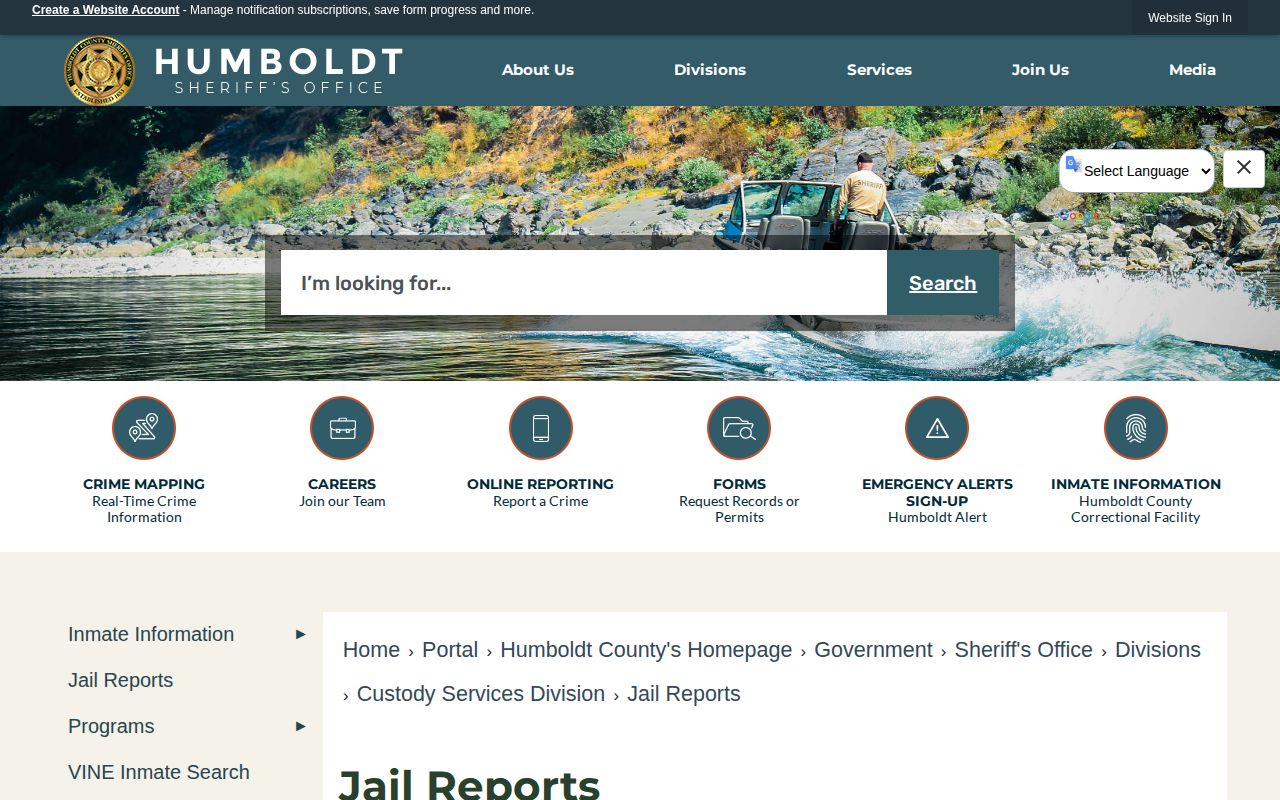
The live page, rather than this interface capture, controls which reports are currently available.
Fields in a Humboldt Arrest-Log Entry
A Booking Sheet is built around one intake event. Public examples can carry more identifiers than a basic match needs. Use the least sensitive fields you can. Exact residence, full birth date, MNI, victim information, and similar unique details should stay unpublished even though the document displays them.
| Field | How to interpret it |
|---|---|
| Person’s name | Starting match only; confirm with date and agency |
| Arrest date and time | When the arresting event was recorded |
| Booking date and time | When HCCF processed the intake |
| Arresting agency or officer | Identifies HCSO, a city police department, or another agency |
| Listed charges | Booking-stage charges that can change in court |
| Release date, time, and type | Describes the custody exit, not the case outcome |
| Booking or MNI number | Agency matching keys that should be handled with care |
What the county releases can be narrower than a requester expects. HCSO may withhold victim and witness identities. Juvenile suspects and medical conditions stay out too. So do investigative details, mental-health holds, and anything that could affect a court case or safety. Redactions are routine. An exact address may shrink to a general street or block. That protects the people involved.
Weekend Arrest Reports and Holiday Delays
Jail reports and press releases run on different clocks. The sheriff uploads jail reports each morning. HCSO press releases, though, can drop at night, on weekends, or on holidays. Some weekend and holiday incidents wait until the next workday or until details firm up. A Monday cluster rarely means Monday arrests.
Trust the internal timestamps instead. Check the prior Friday through the current report group. Compare the Booking Sheet with the Released file whenever custody changed fast. Someone arrested late at night can finish intake hours later, and that booking may land under a different reporting date even though the arrest belongs to the earlier day.
Humboldt Arrest Archives and Retention
A month of links is all the page shows. HCSO promises no permanent online storage there. Cite sources carefully. Save the exact report title and publication date before the link vanishes. The HCSO Records Unit can chase it down. Requests go through the online form, sheriffrecords@co.humboldt.ca.us, or the county NextRequest portal. HCSO usually answers in 7 to 10 business days.
Older material follows a different path. The Humboldt County Historical Society holds Humboldt Jail Collection material plus Eureka arrest and jail registers among its government collections. California State Archives reference staff can point to older local-government series. Those archives are not current arrest logs.
Local News Is a Secondary Arrest Blotter
Lost Coast Outpost BOOKED turns daily jail information into an automated local feed. Its RELEASED companion page lists release events. PATROLLED is different. That one covers calls for service, not arrests. Read the outlet's own disclaimer and labels before trusting any row.
Automation makes a multi-day scan convenient. Still, the feed is secondary to HCSO. A stale row can linger after the official source changes. Redheaded Blackbelt runs individual law-enforcement stories and sometimes reproduces booking sheets. The Times-Standard and North Coast Journal cover selected crime and court news. RecentlyBooked offers an unofficial Humboldt page billed as a recent 30-day view, while a historical commercial mugshot archive is not a current feed.
None replaces the government report. The BOOKED page is a handy way to see how a local publisher presents jail-derived information.
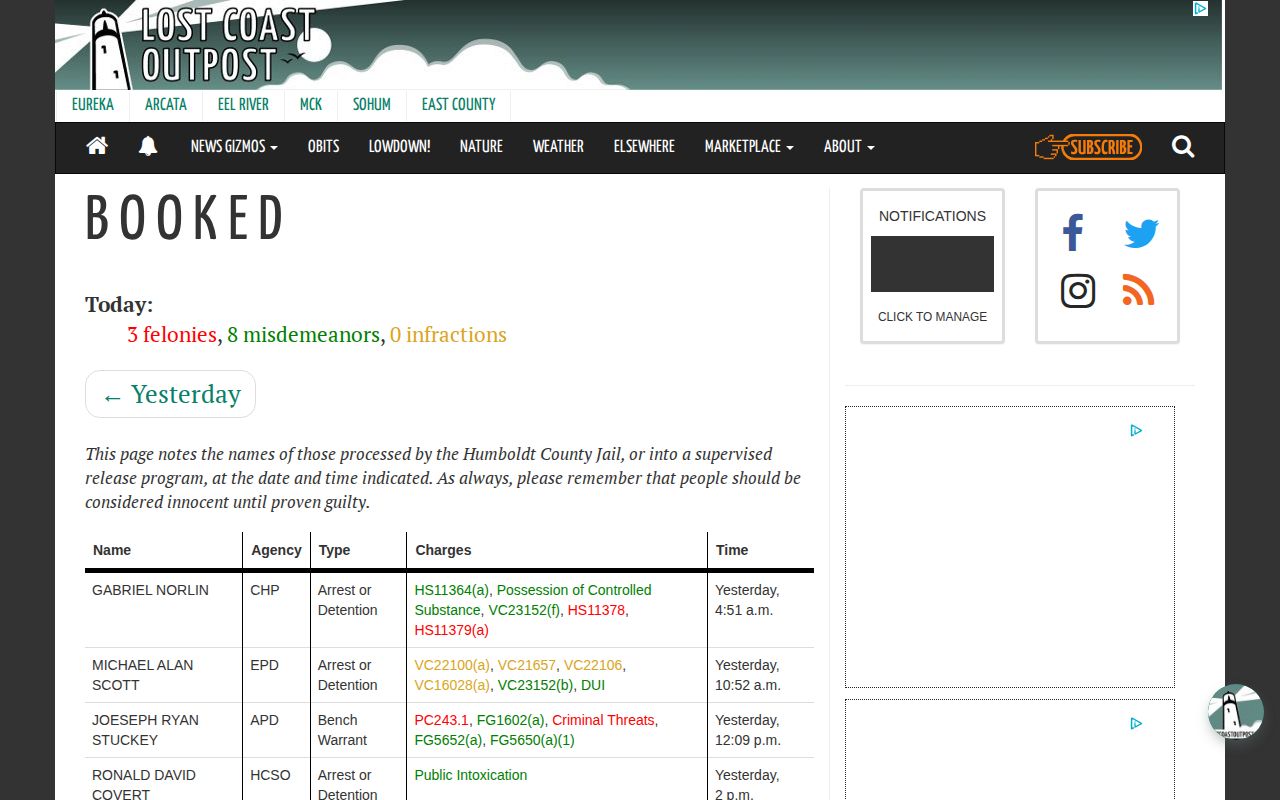
This capture documents the publisher’s interface, not an official Humboldt County record.
Why the Arrest Log Is Not a Crime Trend
Numbers in an arrest log tempt people to count rows and call it a crime rate. Resist that. One arrestee can generate several entries, and agencies in Humboldt County publish on their own schedules. Reports get corrected. The online window shifts. Even calls for service mix in events where nobody was ever arrested. Release data only tracks exits from custody, nothing more. Historic datasets help with long-range questions. Use them only after you understand what they count and what they leave out.
Need a named person today? Start with the Humboldt County recent arrests source guide. Trend work is different. Use an official statistical series with a stated time range and method instead of adding up scattered PDFs. Also keep four dates distinct. There is the arrest date, the booking date, the date a report went public, and whatever the court later decides.
City portals complicate the picture. Eureka Police, Arcata Police, and Fortuna Police may each post agency-level incidents or arrest entries. After someone is booked at HCCF, though, the county report becomes the booking record of authority. Expect mismatches. The two custodians use different update times, descriptions, and identifiers. Each captures a different moment in the same event. When something does not line up, check both offices rather than trusting either page alone.
The sheriff's press-release page adds yet another layer. It highlights incidents chosen for public communication, and it can post after hours. That is not an all-arrests list. Read the arrest log report by report. Turn to the court record for a case outcome, and ask the Records Unit when an online item disappears.
One more habit: note the source and the time you checked. The live report index changes. An old screenshot or saved PDF shows what was published then, not who is in custody now. Any multi-day review should close with a fresh official check. That means HCSO, HCCF, VINELink, or Humboldt Superior Court, depending on the question.